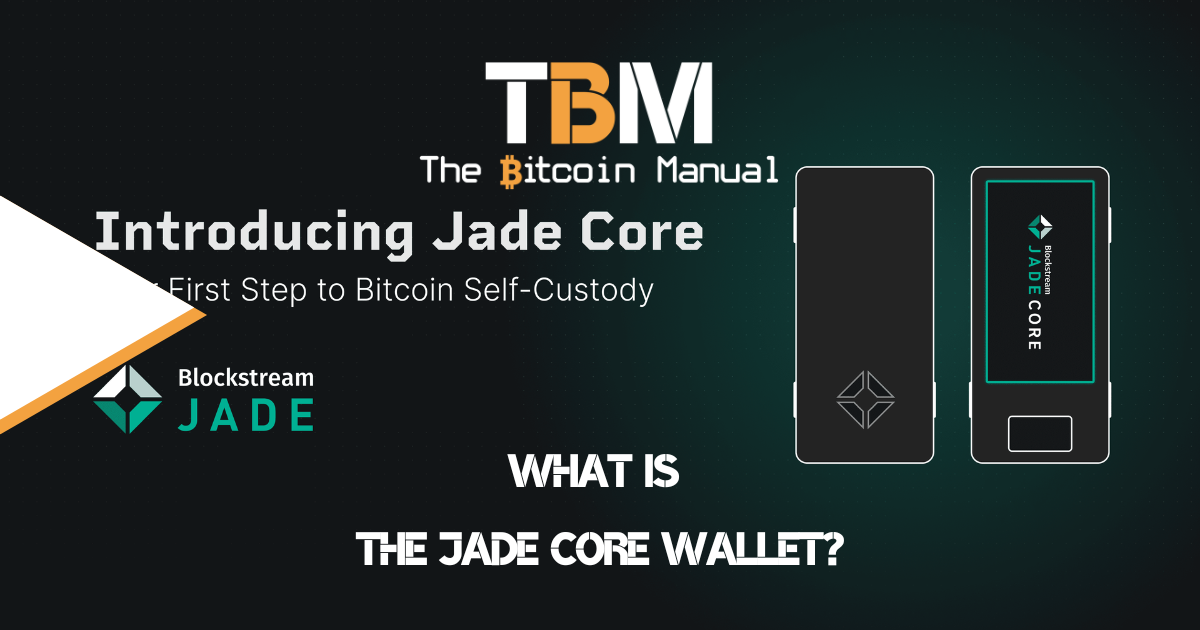
Blockstream announced the latest addition to its Jade range of signing devices: Jade Core, a new hardware wallet designed to lower the barrier even further and push more users towards Bitcoin self-custody. Unlike previous hardware wallet releases that targeted advanced users or required technical sophistication, Jade Core strips away complexity while maintaining the uncompromising security model that has made Blockstream Jade one of the most trusted names in the Bitcoin hardware wallet space.
At $99, Jade Core acts as a basic entry point into the world of self-custody—one that proves simplicity and security are not mutually exclusive.
The hardware wallet market has traditionally been segmented between beginner-friendly devices with limited features and advanced wallets packed with capabilities that intimidate newcomers.
Jade Core breaks this false choice.
It’s designed for anyone who wants to move their Bitcoin off an exchange and into their own hands, without needing to understand cryptography, cold storage workflows, or advanced recovery procedures. While affordable and simple to use, the Jade Core still has the same open-source security architecture that powers Blockstream’s premium Jade Plus model.
What Makes Jade Core Unique: The Simplicity Selling Point
Jade Core’s unique selling point is its obsessive focus on simplification without sacrificing security. Blockstream deliberately removed complexity, not safety. This is a crucial distinction that explains why Jade Core exists in the first place.
The device features a streamlined setup process that takes minutes rather than hours. Users power it with a standard USB-C cable, pair it instantly with the Blockstream app on desktop, iOS, or Android over Bluetooth, and they’re ready to begin. There’s no complex firmware configuration. No confusing recovery phrase management flows. No technical jargon cluttering the user interface. Everything is designed to feel intuitive to someone who has never owned a hardware wallet before.
The device itself is elegant in its minimalism.
It’s compact—just 65mm × 30mm × 12mm and weighing only 20 grams—making it pocket-sized and travel-friendly. The 1.9-inch IPS LCD display with enhanced vibrancy makes verification of addresses and transactions clear and unmistakable.
Jade Core uses Blind Oracle PIN protection, the same advanced security model as Jade Plus, but presents it in a way that requires zero understanding of how it works.
Users simply set a PIN and verify their device’s authenticity during setup using Blockstream’s genuine check feature. That’s it.
The core value proposition: anyone can take self-custody of Bitcoin in minutes, without technical expertise, without sacrificing military-grade security.
How Jade Core Fits Into Blockstream’s Product Range
Blockstream now offers three Bitcoin hardware wallets: Jade Core, Jade, and Jade Plus. Understanding how they fit together is essential to understanding Jade Core’s role in the ecosystem.
This three-tier structure is deliberate. Jade Core doesn’t cannibalise sales of Jade Plus.
Instead, it expands the market by removing the barrier to entry. Someone with $99 who has always wanted self-custody but was intimidated by complexity now has a path forward. Jade Plus remains the choice for users who want every possible feature and are willing to pay premium prices for it. Jade occupies the middle ground.
All three models share Blockstream’s commitment to open-source design. The hardware schematics, firmware, and software are all publicly available on GitHub, allowing anyone to audit the security model. All three use the same Blind Oracle PIN protection system, where the secrets needed to access your wallet are split between your unique PIN, the device itself, and a remote blind oracle server that never sees or stores your data. You can even run your own blind oracle if you prefer.
The key difference: Jade Core prioritises simplicity, while Jade Plus prioritises flexibility. Neither compromises on the security bedrock that both are built upon.
Who Is Jade Core For? Understanding the Target User
Blockstream explicitly positions Jade Core as ‘your first step to Bitcoin self-custody.’ This messaging reveals exactly who this product is designed for.
Notably, Jade Core is probably not for traders or users who need frequent cryptocurrency transactions. The lack of a camera makes QR code scanning impossible (you’ll need to type addresses manually). There’s no battery, so it requires a power connection.
There’s no SD card slot for air-gapped firmware updates. These aren’t limitations—they’re intentional choices to reduce complexity. But they mean that users planning frequent transactions might be happier with Jade Plus.
The Broader Context: Why Jade Core Matters Now
For years, hardware wallet companies built devices for people who already understood Bitcoin. The interfaces required technical knowledge. The setup processes involved complex recovery phrase management. The advanced features catered to power users.
This created a chicken-and-egg problem.
People were afraid to buy Bitcoin because they were afraid of losing it. Hardware wallets existed to solve this problem, but they required knowledge that newcomers didn’t have. Many potential users were locked out of self-custody entirely.
Bitcoin adoption requires removing friction at every layer. Blockstream already removed friction at the application layer with the Blockstream App, which makes buying and managing Bitcoin easy. Jade Core removes friction at the custody layer. Combined, they create a clear path: download the Blockstream app, buy Bitcoin directly, plug in Jade Core, transfer your coins to self-custody, and you’re done. From zero to complete Bitcoin self-sovereignty in hours.
The launch also signals confidence in the self-custody narrative. As regulatory scrutiny of centralised exchanges increases and more users learn about the risks of exchange custody, demand for hardware wallets will accelerate.
Jade Core is Blockstream’s way of saying: we’re ready to serve the millions of users who are about to make the shift to self-custody.
Self-Custody Made Accessible
Jade Core is a simple device with a profound purpose: to prove that Bitcoin self-custody doesn’t require technical expertise or high costs. At $99, with a setup process measured in minutes and a security model that requires zero understanding of cryptography, Jade Core removes the last major barrier to Bitcoin ownership.
In Blockstream’s three-tier product strategy, Jade Core is the entry point, Jade is the flexible standard, and Jade Plus is the premium destination. But all three share an uncompromising commitment to open-source design, transparent security, and user control.
For anyone tired of trusting exchanges with their Bitcoin, or anyone who has always wanted to own their coins but was intimidated by the complexity: Jade Core is made for you. It’s the easiest path to true Bitcoin self-custody that exists today.
Ready To Get A Jade Core?
If you would like to purchase the Jade hardware wallet, you can get one directly from the Blockstream store
Do your own research.
If you want to learn more about the Jade Core, use this article as a starting point. Don’t trust what we say as the final word. Take the time to research other sources, and you can start by checking out the resources below.